

👋 Hi, I’m Jeff. I write weekly about lessons I’ve learned leading product teams and working to lead well in chaotic environments, drawing on 25+ years of building.
⏱ Read time: 7 minutes
This Sunday, the Seahawks play in the Super Bowl with a chance to win the team’s first championship since 2014. After a decade of mediocrity, second-year head coach Mike Macdonald, has turned the Seahawks around.
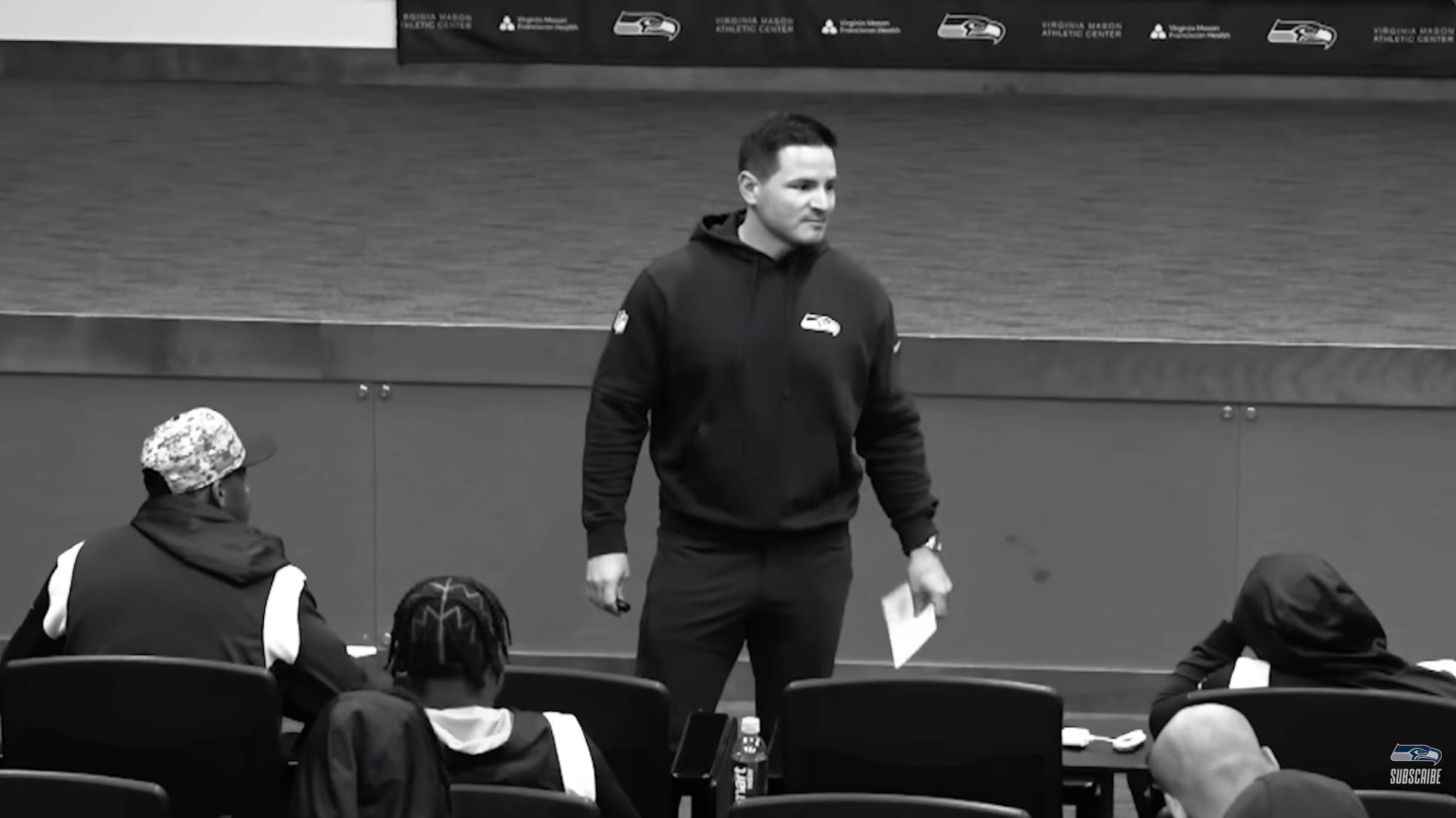
How did the Seahawks get here so fast? They cemented one critical building block 21 months ago in April 2024. Macdonald stands in front of his team for the first time. He’s 36 years old. Most of these players are older than he is. The room is quiet.
Macdonald asked the room to take a minute and imagine being in the NFC Championship in the future. He asked them to focus on the confidence they’d have, how they’d play, and who they’d become playing in Seattle’s cold, windy winter conditions.
In essence, the coach laid out a vision. He asked his team to visualize their success.
In the lead up to the Super Bowl, the Seahawks recently released a video that brings this story to life, with footage and music for added emotional punch. To be fair, Macdonald pushed the team to imagine the result nine months from that day, so he was one year off. Still, it’s an uncanny articulation of where they were going—and it happened pretty close to how he described it.
Video: Stacking Every Opportunity - NFC Championship Hype Video | Seattle Seahawks
Excerpt from Macdonald’s speech:
One of the things I want you guys to feel going through this program is that we have a vision for you and this football team. Today, I’m going to take you here now. So stay with me… Just take a minute here and fast forward to January NFC Championship. It’s 37 degrees. It’s wet. It’s windy. All right, shitty for them, okay? But it’s just right for us.
We’re loose. We’re focused. We’re confident. We just spent the last nine months stacking every opportunity that we had. The team across from us in the other locker room, ok, they’ve seen the videotape of us. They know what they’re in for. Eleven guys playing as one — every snap….They know they’re facing a team that won’t die, and won’t quit. They know. It’s inevitable. So let’s go to work.
Creating a Vision Creates Clarity
Creating and stating a vision is powerful—for teams and individuals. Why? A clear vision acts as a mental blueprint for the future. Once you’ve vividly imagined a future state, your brain treats it as a problem to solve and automatically notices paths, resources, and opportunities that move you toward it.
The best visions guide decisions and fuel motivation for a desired purpose. Without one, you’re reactive, chasing urgency, optimizing locally, never quite sure if you’re building toward something meaningful and different or just staying busy.
A clear vision makes abstract intentions tangible and lifelike. It shifts your focus from what’s true today to what you’re becoming. This cuts through daily noise and focuses you on what matters.
A warning: vision without action is just daydreaming. And a vision that’s too rigid becomes a straightjacket. MacDonald’s team didn’t just imagine January—they “stacked every opportunity” for nine months. The vision gave them direction; the daily work got them there. The best visions are also flexible enough to adjust. MacDonald was off by a year, but the destination stayed the same. Hold your vision firmly, but your path loosely.
You can increase the likelihood you’ll get what you want. But you have to state it and bring it to life, whether spoken, written or more. That’s vision.
I’ve Seen This Work at Three Levels
Over my career, I’ve experienced vision working at the organizational level (at LinkedIn and Included Health) and at the personal level (my own practice). Here’s a little of what I’ve learned from each:
At LinkedIn, I watched how a clear vision guided daily decisions. CEO Jeff Weiner spoke about LinkedIn’s vision repeatedly:
“The vision is a dream. It’s True North, and if it’s done properly, it’s really designed to inspire people so they have something to reach for. Historically, at least for me, a vision wasn’t necessarily something you operationalize or something you plan around, but it does provide some shared sense of purpose for an organization.”
LinkedIn’s vision was, and still is, to create economic opportunity for every member of the global workforce. One of my favorite visual representations is Jeff bringing this idea (2 min) to life as the Economic Graph at the Morgan Stanley Technology, Media & Telecom Conference in March 2014. LinkedIn’s product development pointed at this clear vision for years. I saw how it worked in practice, cutting through daily noise and keeping teams focused on what mattered.
At Included Health, our design and research team created early prototypes and videos showing our vision for healthcare: an AI-powered digital health assistant named Dot. These artifacts were shown to teams, the company and key clients, generating excitement and momentum that shaped the product’s direction. In this case, the literal power of visual assets was clear. And those elements shipped and that work continues today working from this initial vision.
Personally, I’ve experimented with single-page written visions for myself spanning one year or longer. In this context, a clear vision bypasses obstacles by widening the lens by which you view your life. Right now, I’m working from a two-page vision I wrote a few months ago. I revisit it every few weeks—sometimes just reading it, sometimes adding clarity as things come into focus. When opportunities or requests come up, I often find myself asking: Does this move me toward what I described? That filter alone has changed what I say yes to.
Graham Weaver, founder of Alpine Investors and lecturer at Stanford GSB, frames it this way:
“Write a new story for your life based on three principles: Describe where you want to be five years from now in detail, describe it as the outcome you would want if you knew you would not fail, and don’t worry about the how—the how is the killer of all great dreams.”
I didn’t know how everything in that vision would come together—and that was the point. The how would have killed it before it started.
Three Elements That Make Visions Real
1. Make It Specific and Descriptive. Paint a “movie scene,” not a bullet list. Describe what success looks like in vivid detail so that you or anyone can see, feel, and understand exactly what you’re building toward.
Try this: Start by removing all constraints. If you had a magic wand, what would this look like? Let yourself dream without limits first—you can reality-check later.
Then try this prompt: “It’s a Tuesday in February, three years from now. I wake up at 7am feeling energized. I check my calendar and see…” Continue building out your ideal day: What are you working on? Who are you meeting with? How do you feel? What impact are you having?
2. Document It. Getting your vision out of your head and into tangible form makes it real and shareable. This allows others to understand it, run with it, and make it their own.
Document it in whatever format works best: Written narrative (1-2 pages), visual mockup or prototype, or video. This is easier to do now than ever with AI tools.
Present Tense Embodiment: Write or build your vision as if it’s already true. Use first-person, present-tense language. Instead of “I will be leading a team,” write “I’m leading a team of...” This subtle shift in language creates psychological momentum and helps you embody the future you’re creating.
3. Get far enough into the future. Shoot for a three-to-five year time horizon that’s both aspirational and achievable. This timeframe is long enough to allow for significant transformation but near enough to feel concrete and actionable.
Getting far enough into the future means you’re not paralyzed by logistics. You’re focused on the destination, not the obstacles.
When it feels overwhelming: Break your vision into smaller pieces. Ask yourself: “What’s one small step I can take this week to keep my vision alive?” You don’t need to see the whole path—just the next step.
Macdonald’s vision for the Seahawks was clear and specific. Twenty-one months later, they were in the NFC Championship—in January, in Seattle, in the cold and wind, just like he described. This Sunday, they’re in the Super Bowl.
He didn’t know it would work. He just knew it was worth imagining.
Your turn. What’s your vision? Write it down. Make it specific. Get far enough into the future. Then go to work.