

I write weekly about clarity, presence, and leading well in chaotic environments, drawing on 25+ years leading product teams. If you’re a leader, operator, or founder, I hope you’ll subscribe.
Read time: 3 minutes
People-pleasing is a quiet habit—and often an unseen roadblock to better work in teams. It’s the reflex to prioritize others’ comfort, approval, or emotions over your own—often without realizing it. For many, this habit can form early in life as a way to avoid conflict or earn acceptance. I’ve seen it in teams I’ve led, people I work with, and in myself.
I still catch myself slipping into people-pleasing—softening language or taking on too much. Bottom line: I’m always at my best when I actively push through it. That’s when I’m most myself, most creative, and most focused on what matters.
The same is true for teams. Teams that push past this instinct tend to be more creative, effective, and fast-moving.
People-Pleasing at Work
People-pleasing often begins in early family dynamics. But at work, this way of interacting in the world makes it harder to say the clarifying, valuable truths that move teams forward. Left unchecked, it can derail focus, drain creativity, and keep teams from doing their best work. It can also affect the often-overlooked key to great work—time in deep focus—because teams end up spending time on less important things, since fixing what’s off means someone might be unhappy.
Clarity, sharp points of view, and time for deep work are the lifeblood of the best teams I’ve seen. People-pleasing behaviors work against all three of these factors when they cause teams to avoid conflict, over-accommodate, or soften the truth. That’s a team operating at less than full power.
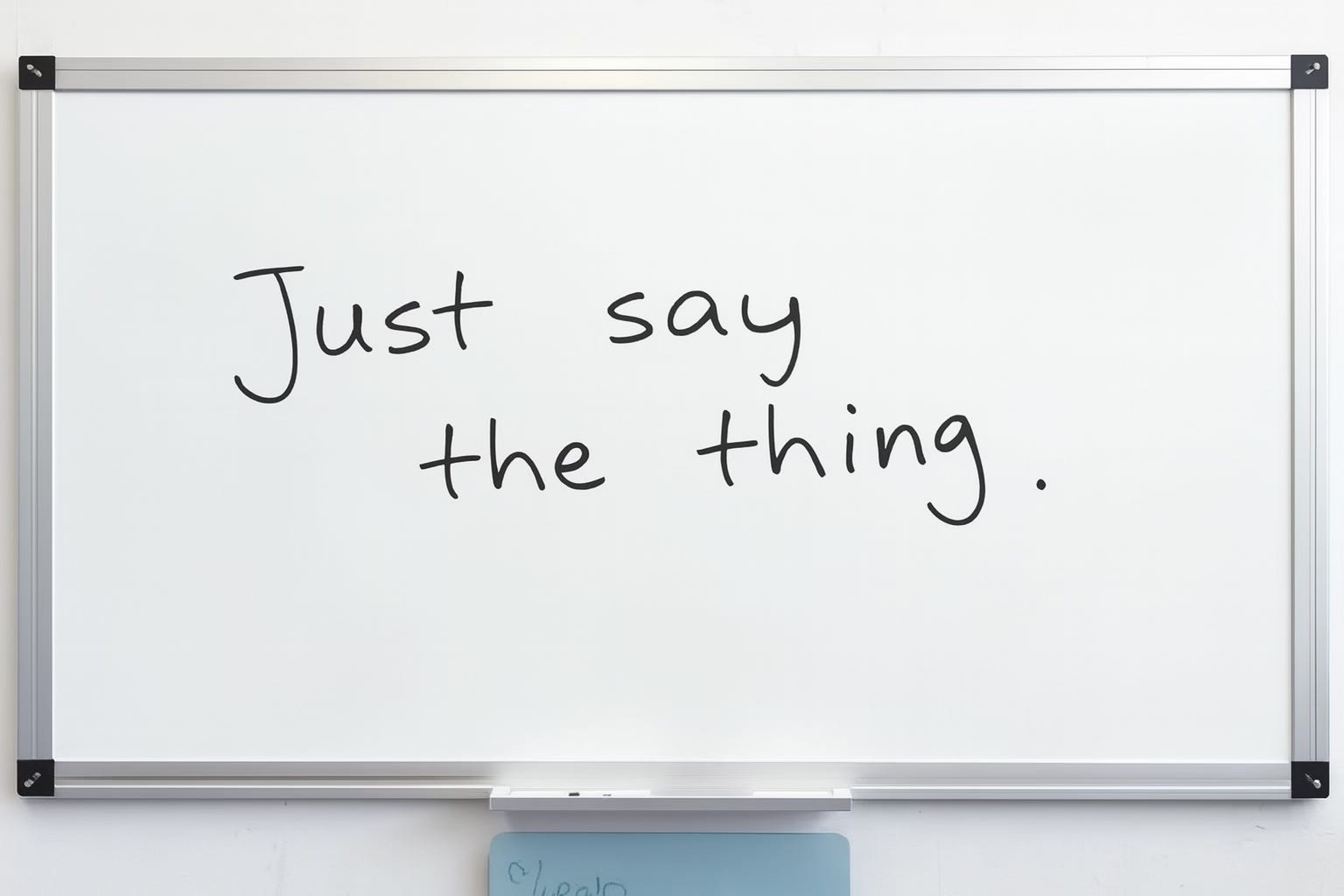
Imagine creative sparks in a team’s collective minds—but clouded by an unwillingness to say the thing. Or notice what happens when a team’s time for deep work evaporates with overcommitments made because saying no is a little uncomfortable.
What I’ve Learned
When I’m at my best, I cut more cleanly through these moments by being as direct, kind, and honest as possible. Brené Brown says it well: “Clear is kind.”
And the ROI is real. For example:
The misalignment you’re afraid to surface gets resolved before it becomes a fire.
You clarify the team’s strategic direction sooner—and it’s sharper, not muddied by over-accommodation.
You free up time to focus on higher-value work by saying no to commitments you can’t take on.
Your manager gets the version of you they actually need, one who says where things can be better.
This enhanced clarity can affect how you feel in addition to how you work. You end up feeling more grounded, more like yourself, and less drained by over-managing reactions to your work. It’s a skill I’m still practicing, even while I’m helping others dive into it more often.
Ways to Try This Out
A good book to explore is The Courage to Be Disliked, by Ichiro Kishimi and Fumitake Koga. The main idea of the book is that your happiness depends on a willingness to live by your own truth and clarity, principles you define, even (especially) when others do not approve. True clarity—and freedom—is in choosing authenticity over approval. Saying what you think. We’re responsible for our own behavior, not other people’s reactions to it. Growth almost always requires risking disapproval.
Want to try this more quickly in your day-to-day? Test-drive it this week:
Pick one conversation you’ve been holding off on. Just one. Ideally, one where you’re genuinely concerned about how the other person might react.
Take a breath.
Say the thing that feels most true.
Notice how much lighter you feel afterward. Usually, their reaction is far less than you imagined. What’s happening? You’re showing up more fully and trusting yourself to say what needs to be said. Each time you choose clarity over comfort, you build the muscle of self-trust—so keep going. You’re steadily making space for more creative work, deeper conversations, and better results.
What’s one moment this week where you held back from saying the thing?
PS - If you’re not subscribed yet, I’d love to have you along each week.
Links cited:
Rachel Nuwer (edited by Allison Parshall), “How Childhood Relationships Affect Your Adult Attachment Style, according to Large New Study,” Scientific American, November 1, 2025, (Link)
Brené Brown, “Clear Is Kind. Unclear Is Unkind.”, BrenéBrown.com, October 15, 2018, (Link)
The Courage to Be Disliked — Ichiro Kishimi and Fumitake Koga, The Courage to Be Disliked: The Japanese Phenomenon That Shows You How to Change Your Life and Achieve Real Happiness, English ed. 2018 (original Japanese edition 2013),
If this helped you think more clearly about leading teams or products, I write here once a week.
Subscribe here.