

👋 Hi, I’m Jeff. I write weekly about lessons I’ve learned leading product teams and working to lead well in chaotic environments, drawing on 25+ years of building.
I re-launched a new website, focusing on coaching I’m doing.
⏱ Read time: 3 minutes
It was usually about 7:30 am.
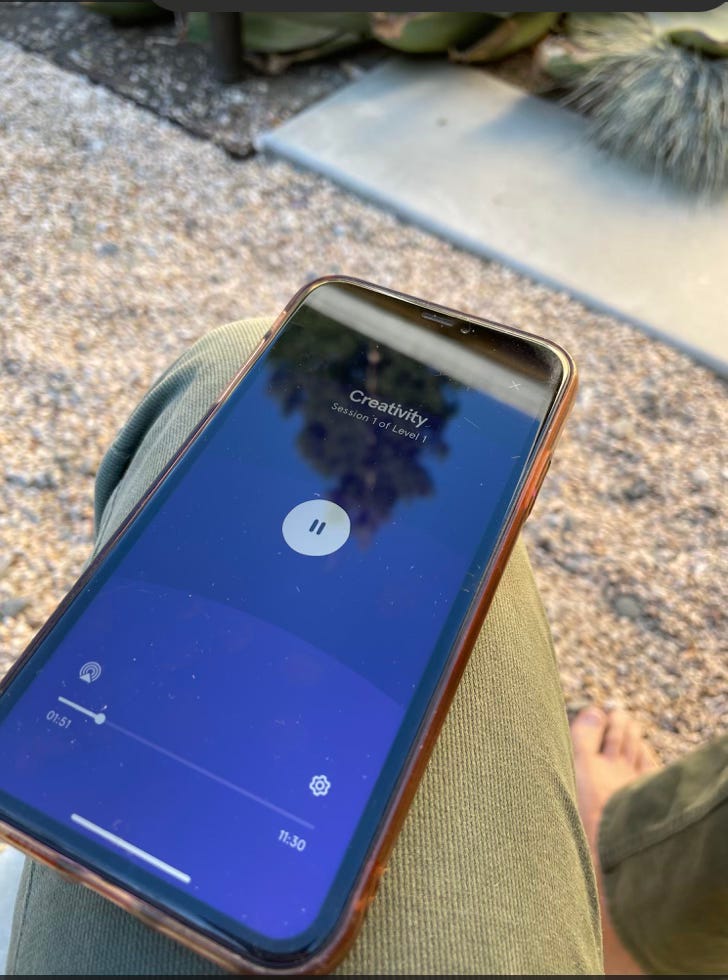
Before anyone else arrived at the office, I’d slip into the only conference room we had, open the Headspace app, and sit quietly for a few minutes. At the time, I was finishing a seven-year tour of duty at a small, 20-person startup in Silicon Valley.
Why try meditation? I was hunting for edges — better systems, better strategy, better performance. Meditation felt like one more experiment worth running.
But that same drive to improve had a cost.
Back then, I put too much pressure on myself – ruminating, taking everything too seriously. Our sons were young. I thought having kids might slow the overthinking. Instead — more people depending on me, more to lose.
The overthinking pulled me out of rooms. At times I’d be less present, less patient, and less thoughtful — with the people I cared about most.
But my morning conference room experiment was causing something to shift.
That didn’t mean the habit was easy. It’s never a fully consistent practice for me. I manage a few times a week when things are going well, but rarely every day. I often have to start over. That’s still true today.
I’ll skip the science on mindfulness. Here’s what I noticed:
I started watching myself from a slight distance, noticing how I was showing up.
I could catch my mind wandering mid-dinner, mid-conversation—and bring it back.
My stress fuse got longer. I’d notice the buildup and pause before reacting…or not reacting at all.
But the shift I didn’t see coming was what others noticed. My wife would occasionally ask, “Hey, how’s your meditation going?” That landed two ways for me: this must be working…maybe I hadn’t always been easy to be around.
The experiment was changing me. That person happened to perform better at work too.
But what I valued more was becoming calmer: a better parent, husband, friend, son.
The highest-leverage work isn’t optimizing your tactics — it’s becoming a different person. What changed wasn’t my strategy. It was me.
If you want to feel what that shift is like, start here. A simple practice I learned from a coach: Notice three things around you right now. Research shows that’s enough to interrupt your autopilot. Thirty seconds. Most people are surprised by what they notice.
What were you optimizing for — and what actually changed?
Thanks to everyone who filled out the reader survey last week. If you didn’t get a chance to, I’d appreciate it if you took 2 minutes to do it now: